Quantum computing sounds like science fiction, yet laboratories around the world already run real machines. They will not replace your laptop, but they could change how we solve certain hard problems, from drug design to logistics. This guide explains the basics in plain English, shows where AI fits in, and covers the language challenges that come with global research.
What makes a quantum computer different
A normal computer stores information as bits, each one either zero or one. A quantum computer uses qubits, which can hold a blend of both states at the same time. When qubits are linked, a property called entanglement lets them work together in ways ordinary bits cannot.
The power of quantum machines does not come from raw speed, but from handling certain kinds of calculations in a different way. For many everyday tasks, a classic computer remains the better tool.
Why qubits are so hard to build
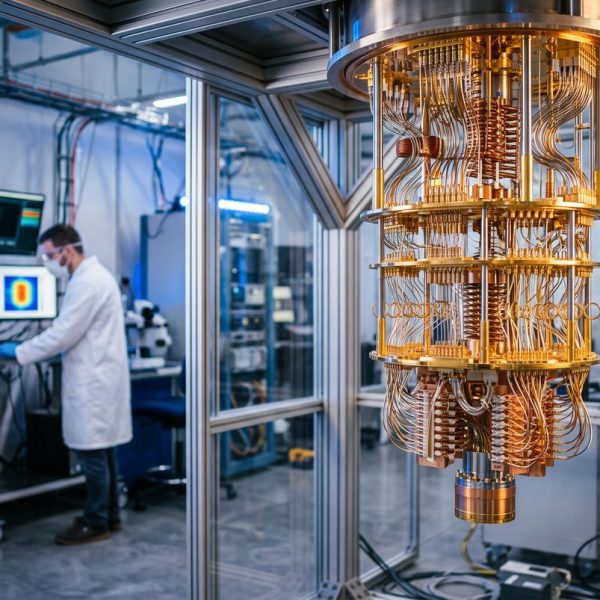
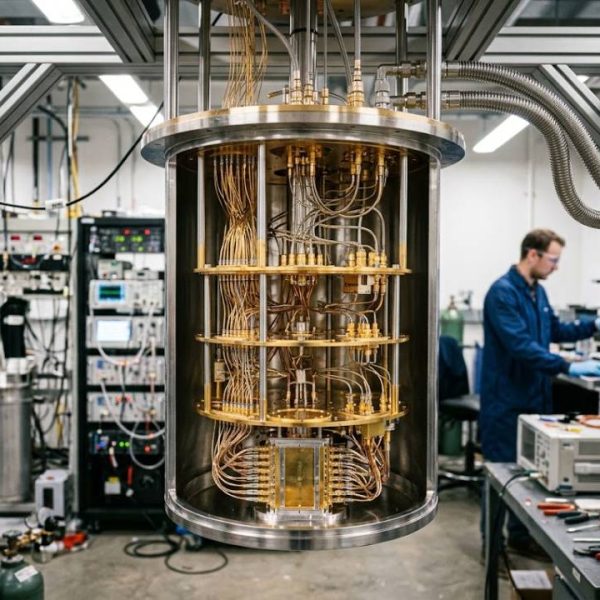
Qubits are fragile. Heat, vibration and stray electromagnetic noise can destroy their state in a fraction of a second. Many machines therefore run inside cryostats, cooled to temperatures colder than outer space.
Engineers use error correction to protect results, but it needs many extra qubits for each reliable one. This is the main reason large, dependable quantum computers are still being developed.
Where quantum meets AI
Artificial intelligence and quantum computing support each other. Researchers explore whether quantum methods can speed up training for certain models or search large solution spaces faster. In the other direction, AI helps calibrate quantum hardware, spot noise patterns and design better circuits.
Most results today come from small experiments and simulations. Treat bold claims with care, and look for peer-reviewed evidence before accepting them.
Realistic use cases
The strongest candidates include simulating molecules for new materials and medicines, optimizing delivery routes or power grids, and breaking down complex financial models. Another well-known area is cryptography, since future machines could threaten some current encryption methods. That is why security agencies already work on post-quantum standards.
Research is truly global
Quantum science is built by international teams. Important papers appear in English, Chinese, Russian, German, French and many other languages. Conference talks, patents and technical manuals add to the flow of information.
Labs that want to follow the whole field often rely on Russian translation services and similar specialist support to read original sources accurately. Terms like decoherence, superposition or gate fidelity must be rendered consistently, or a small error can change the meaning of an experiment.
Using AI for first drafts, people for accuracy
Machine translation can help you skim a paper quickly. For anything you will publish, cite or build on, a human expert should check the result. Technical vocabulary, units and equations leave little room for guesswork.
Our article on AI translation with human editing workflows explains how research teams can combine both approaches without losing precision.
How to follow the field as a beginner
Start with accessible resources from national programs. The National Quantum Computing Centre in the United Kingdom publishes news, explainers and events for curious readers. Then move on to university courses and open lectures.
Learn a few core ideas well: qubit, superposition, entanglement and measurement. Everything else builds on them.
Skills the industry needs
Quantum teams need physicists, software engineers, mathematicians and also communicators who explain results to funders and the public. If you work in AI, learning linear algebra and probability gives you a strong start. Programming kits from major providers let you run small circuits on simulators for free.
A simple way to explain it to colleagues
Imagine finding the lowest point in a huge mountain range at night. A classic computer walks the paths one by one. A quantum algorithm shapes a kind of wave that makes the right answers stronger and the wrong ones weaker. The picture is imperfect, but it shows that the approach is about smart interference, not magic.
Cloud access for small teams
You do not need a lab to experiment. Several providers offer cloud access to real quantum processors and simulators. Start with tutorials, run a small circuit, and compare the output with the theory. Hands-on practice builds understanding faster than reading alone.
Communicating results clearly
Researchers who explain their work in simple language attract more collaborators and funding. Use short sentences, define each term the first time, and add a diagram when possible. If your audience speaks another language, plan translation early so deadlines are not missed.
Common myths
Quantum computers do not try every answer at once and then pick the best. Their algorithms are carefully designed so that wrong paths cancel out. They also will not make every program faster, and they are not ready to break all encryption today.
What to watch in the next few years
Look for progress in error correction, growth in qubit quality rather than only quantity, and early industrial pilots in chemistry and logistics. Funding announcements and government strategies also signal where the field is heading.
Final thoughts
Quantum computing is a long-term project with real promise and real limits. With clear explanations, honest expectations and accurate communication across languages, more people can take part in shaping what comes next.
While quantum hardware matures, AI teams already work with a very practical layer of artificial intelligence every day. The same organisations use ai marketing tools to explain complex products, plan content and reach the partners and customers who fund further research. That everyday tooling matters because clear communication, as noted above, is what turns promising experiments into supported projects. Teams that master both the deep technology and the tools that promote it will be ready when quantum methods join the mainstream.