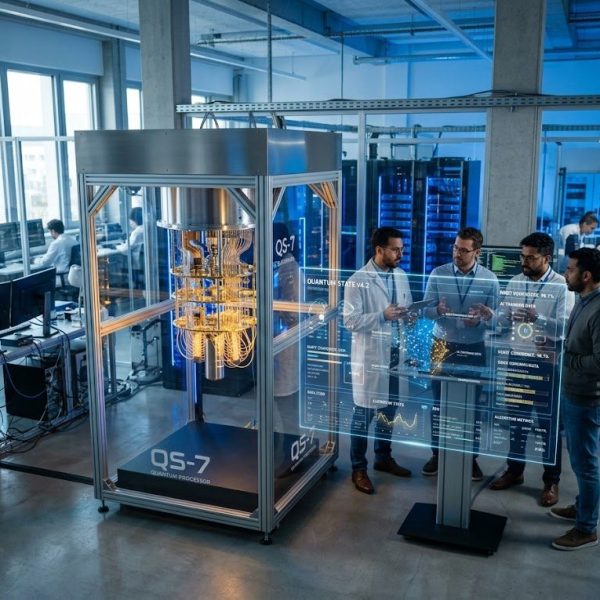
For most of the last decade, quantum computing has lived in the future tense. It was the technology that would, someday, crack encryption, design new medicines and untangle problems that leave ordinary machines stuck. That someday is now arriving in pieces. The real story of quantum computing applications is less about one dramatic breakthrough and more about a slowly growing list of narrow, valuable jobs these strange machines are starting to do better than anything else.
To see where they genuinely help, it is worth understanding why a quantum computer is not simply a faster laptop. It is a different kind of tool, brilliant at a handful of tasks and useless at most others.
What makes a problem worth a quantum computer
Ordinary computers store information in bits that are either one or zero. Quantum machines use qubits, which can hold a blend of both states at once and can be linked together in ways that have no everyday equivalent. That property lets a quantum computer explore many possible answers in parallel, but only for problems with the right mathematical shape. If you want to know more about the underlying physics, the science of quantum computing is well documented, and the short version is simple enough. These devices shine on problems built around structure, probability and simulation, not on email or spreadsheets.
The quantum computing applications that already show promise
The most convincing early use is chemistry. Simulating how molecules behave is punishingly hard for classical computers because the number of interactions explodes as molecules grow. Quantum machines model that behaviour more naturally, which is why pharmaceutical and battery researchers are among the most active users. Better simulations could shorten the hunt for new drugs, catalysts and materials.
Optimization is the second big area. Any time a company needs the best route, the best schedule or the best mix from a huge number of options, the math gets ugly fast. Logistics firms, airlines and energy grids all wrestle with these puzzles. Finance is another natural fit, and the world already runs on software that grinds through such calculations, as anyone who has read about algorithmic trading will recognise. Quantum optimization could eventually push those methods further, though that promise is still mostly on the horizon.
Cryptography sits on both sides of the ledger. A large enough quantum computer could break some of the encryption that protects banking and messaging today, which is exactly why governments are already moving to post-quantum standards. The threat and the defence have grown up together. Machine learning rounds out the list of latest quantum computing applications, though here the honest answer is that clear, practical wins are still thin.
Why the hype needs a reality check
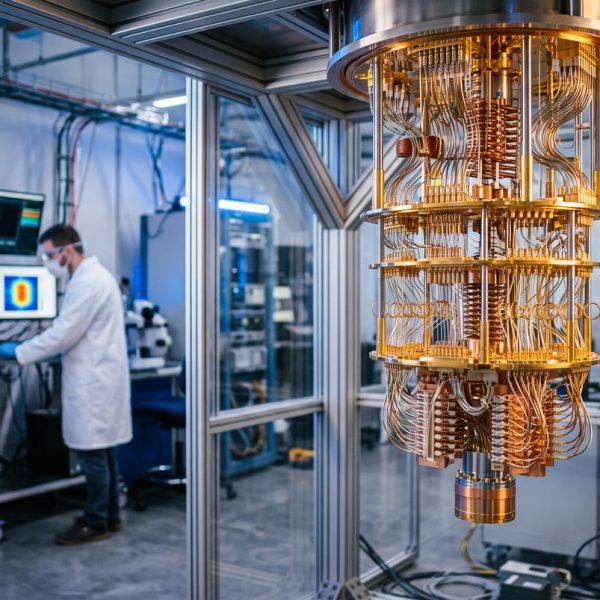
It is easy to read the headlines and assume the revolution has landed. The machines we have now are noisy and error prone, holding their fragile quantum states for only fractions of a second. Today's devices carry hundreds of qubits, but building the millions of stable, error corrected qubits needed for the most dramatic tasks remains a genuine engineering challenge. Ask whether quantum computing is the future and the fair answer is yes, for certain problems, on a timeline measured in years rather than months. Practitioners argue the details constantly in places like the r/QuantumComputing community, which is a useful antidote to breathless marketing.
Who is actually building these machines
The field is not one company chasing a prize. It is a crowded race. Large technology firms have built machines you can rent by the minute over the cloud, which means a university lab or a curious startup can now run a real quantum circuit without owning any hardware. Governments in the United States, Europe and Asia have committed serious public money, treating quantum capability as a matter of national competitiveness rather than a science project. Alongside them sits a wave of specialist startups, each betting on a different way of building a stable qubit, from trapped ions to superconducting loops to particles of light. No single approach has won yet, and that open contest is part of what keeps the progress honest. For anyone tracking quantum computing applications, the healthy sign is not louder promises but more groups quietly shipping usable hardware.
Quantum computing has a narrow set of genuinely useful applications today, and the honest accounts say so rather than promising everything at once. Consumer technology could use rather more of that restraint. The best gadgets are usually the ones that do a single job properly, and the category is crowded with devices that promised a great deal more.
Quantum computing attracts investment on the strength of applications that remain some years away, which is a familiar pattern in technology funding. Attention follows novelty rather than need. Meanwhile the problems behind poverty in africa are mostly solvable with technology that already exists.
How to think about quantum without overreacting
For most organizations the sensible posture is curiosity, not panic. There is no need to buy a quantum computer, and for the vast majority of work a classical machine will stay cheaper and faster for a long time. What is worth doing is watching the specific quantum computing applications relevant to your field, and starting to plan the switch to post-quantum encryption if you hold data that must stay secret for a decade or more.
It also helps to remember that this is a global effort. Research teams in dozens of countries publish, collaborate and compete, and companies bringing quantum tools to new markets lean on careful localization and SEO translation to explain complex technology clearly across languages. The science may be universal, but the audience is not.
The quantum computing breakthroughs will keep coming, and some will deserve the excitement. The smarter move is to track the useful, unglamorous progress underneath the headlines. Follow the applications, not the adjectives, and you will have a far clearer sense of when this technology is ready to matter for you.