
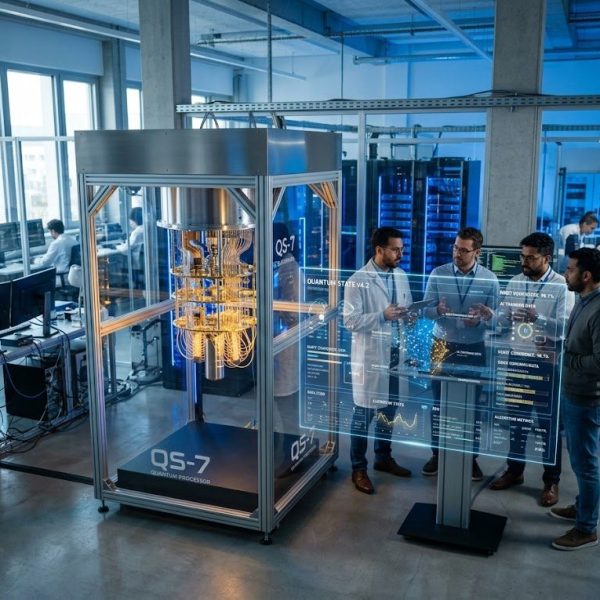
A research team ships a quantum computing platform that could reshape drug discovery. The science is sound, the funding is in place, the demo dazzles investors in San Francisco. Then the product tries to enter Japan, Germany and Brazil, and it stalls. Not because the technology fails, but because nobody localized it.
In advanced technology, the gap between a brilliant idea and global adoption is often just language. The most sophisticated systems still need to be understood by the people who buy, install and trust them.
Why tech companies underestimate the problem
Engineers tend to treat translation as a final chore, something to bolt on after the real work is done. That assumption is expensive. Interface strings, error messages, documentation and legal terms all carry meaning that a rushed conversion can destroy.
Fields like quantum computing and artificial intelligence invent vocabulary faster than dictionaries can absorb it. A term coined in a Boston lab may have no settled equivalent in Korean or Portuguese. Someone has to make the right call, and a generic tool rarely does.
Get it wrong and the cost is real. Confused users, support tickets, failed onboarding, and in regulated markets, outright rejection. Language is not decoration on top of the product, it is part of the product.
The limits of machine translation
Modern engines have improved, and no serious person denies it. But deep tech lives in a world where a single misread word can mislead an engineer or breach a compliance rule.
An automated system does not know that two similar terms mean very different things in cryptography. It does not understand the exact wording a national regulator expects. It cannot judge tone for a market it has never seen.
A machine converts words, a specialist carries meaning across a culture. That difference is what separates software people trust from software they abandon.
This is why growing tech firms lean on professional IT and software localization services rather than a plug-in. The cost of doing it well is tiny next to the cost of a botched launch.
What real localization involves
Strong professional translation services for technology go far beyond swapping words. They adapt an entire experience so it feels native to each market.
A capable translation agency usually applies several layers of control:
Behind most global tech breakthroughs sits an unglamorous layer of documentation that has to survive being read in a dozen jurisdictions. Filings are the sharpest example, because their value depends entirely on wording that holds up under hostile scrutiny abroad. This piece on patent translation covers the errors that most often narrow or invalidate a claim in translation.
- Domain-matched linguists who are native speakers with a background in software or engineering.
- Approved glossaries that lock down product names and technical terms across every document.
- Interface and layout work so buttons, menus and right-to-left text still look correct.
- Localization testing that checks the software actually functions in each locale.
A serious translation company also handles the paperwork that surrounds a launch. Contracts, patents and privacy notices often demand certified translation services that hold up in front of authorities, not casual drafts.
Language as a growth strategy
The numbers make the case on their own. A large share of global buyers prefer to purchase in their own language, even when they speak English well. For AI tools sold to businesses, that preference decides deals.
Companies that localize early reach more users, close more contracts and build trust faster. They also gather better feedback, because customers can actually describe what they need in words they own.
There is a research angle too. When technical papers, datasets and documentation move cleanly between languages, ideas travel further. A model refined in one country informs work in another, and the whole field moves quicker.
Building it in from the start
The tech leaders who win abroad share one habit. They treat language as part of the product roadmap, not an afterthought bolted on the week before release.
Setting up a lasting relationship with a language partner turns translation into infrastructure. When a new market opens, the glossaries, workflows and trusted linguists are already waiting.
In an industry that races to be first, well-managed localization is a quiet accelerator. Quantum machines and AI systems may change the world, but they only spread as far as the words that explain them can reach.